
The Hidden Leadership Role That Turns Vision Into Reality
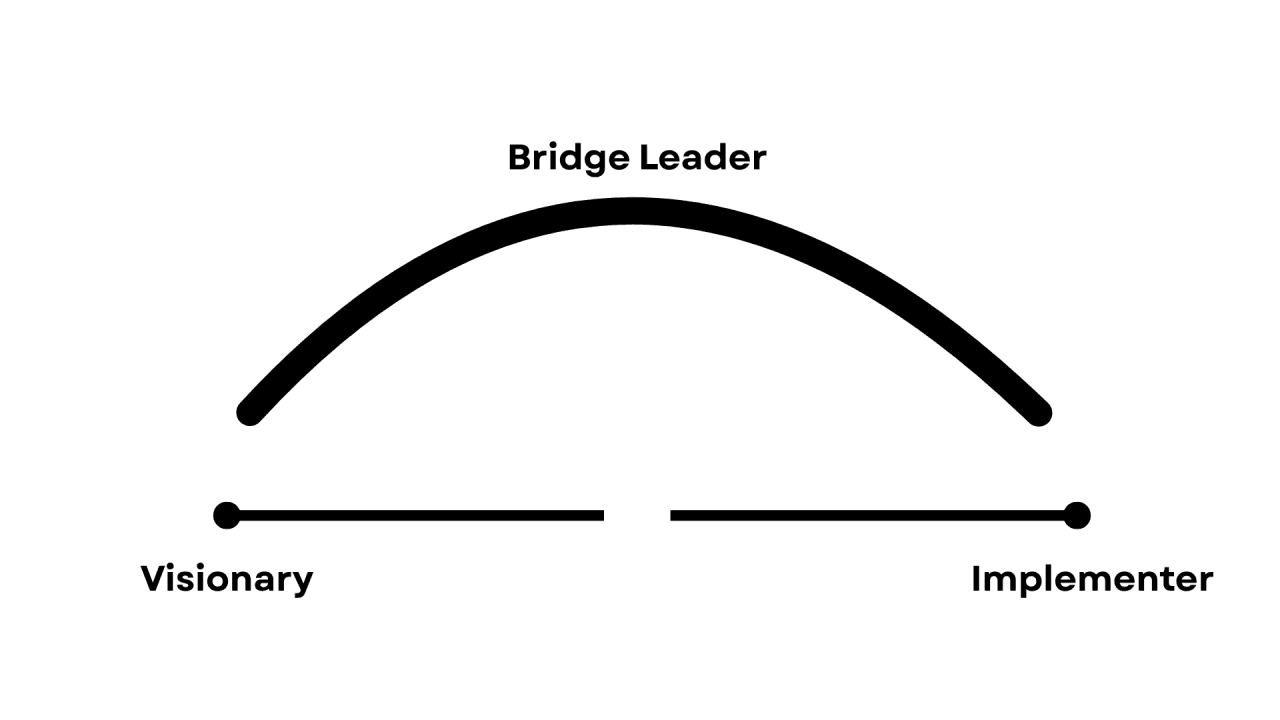
Every leader has strengths, but only a few can master the full range. Some inspire us with bold ideas; others impress us with relentless follow-through. In my career, I’ve noticed these capabilities exist along a continuum.
On One End Is Visionary Leadership
In my experience, only a small portion of leaders are true visionaries, I estimate just 5%. They can see what others cannot, but their rarity often means organizations lack clear future direction.
Visionaries excel at imagining bold futures before anyone else can. Their strengths lie in generating transformative ideas, envisioning new markets, and painting vivid pictures of what could be. Yet they can become impatient with the long, detailed process required to bring their ideas to life. They may even jump to the next big idea before the first is realized, leaving teams confused about what to prioritize. Visionaries thrive on possibility, but often need a partner who can translate their ideas into concrete, actionable steps.
On the Opposite End Is Implementer Leadership
By far the most common leadership type. Based on what I've seen, roughly 90% of leaders fall into this category. They excel at taking a defined mission and driving it to completion with discipline and tenacity. Their strengths include persistence, attention to detail, and the ability to solve present-day challenges. But they may feel less comfortable in the abstract space of long-term visioning. Implementers can become frustrated when visionaries underestimate the complexity or time required to make an idea real. Like visionaries, they benefit from a complementary partner who can frame their work within the broader strategic picture.
Both Types Are Essential
Visionaries inspire the future. Implementers make it real. Neither is “better,” but each is incomplete without the other. Each thrives in one dimension but struggles to fully operate in the other, creating a natural gap that can slow or derail progress.
This gap is exactly why a third type of leader becomes so critical in organizations: someone who can connect these two worlds and keep both sides aligned. These leaders are exceptionally rare. From years of observing leaders, only about 5% naturally operate in this space.
The Bridge Leader
From my own observations, I’ve also seen how essential clear, precise communication is between the two ends of the spectrum. Implementers often misunderstand what visionaries truly expect, while visionaries can become frustrated when implementors struggle to articulate confident, detailed plans. This misalignment creates unnecessary tension, slows progress, and erodes trust.
The bridge leader solves this problem. They tune their message to match the needs of both sides, helping implementors understand the "why," and helping visionaries see clear, credible progress.
A small fraction of leaders can work across the full spectrum:
- They can define an inspiring future state.
- They have the patience, discipline, and tenacity to see it through to reality.
- They can translate vision into action and implementation back into strategic insight.
If you are one of these leaders, you have a unique gift. You can operate in both worlds, and more importantly, you can bridge them for others.
Your Role as a Bridge Leader
Here’s how to make the most of your gift:
- Assess and Pair Leaders Thoughtfully Before collaborating, ask yourself: Are they primarily a visionary or an implementer? Where do they thrive? Don’t assume they can operate across the entire spectrum. Once you understand their natural position, pair them with someone who excels at the opposite end. Great results come from balance, not from trying to change someone’s core strengths.
- Translate Relentlessly As a bridge leader, your role is to break down the vision into clear implementation steps with milestones and momentum so visible progress can be achieved. You also serve as the communicator between both ends of the spectrum, explaining the "why" behind the vision to implementors, and sharing the implementation plan and its progress back to the visionary.
- Guard Against Overload Your ability to operate in both worlds is powerful, but also exhausting, because you are constantly shifting mindsets, languages, and priorities to keep both sides aligned. Protect your energy. Prioritize the highest-value areas where your bridging skills will have the greatest impact.
If you are a bridge leader, you are more than a strategist or an operator, you are the connector. You help organizations move from dreaming to doing without losing either clarity or momentum.
The truth is, companies with this kind of leadership don’t just imagine the future, they make it happen. Reflect on your place along this spectrum. Embrace your strengths, seek partners who balance your gaps, and step boldly into the bridge role when needed. Your ability to connect vision with implementation isn’t just valuable, it’s transformative.